
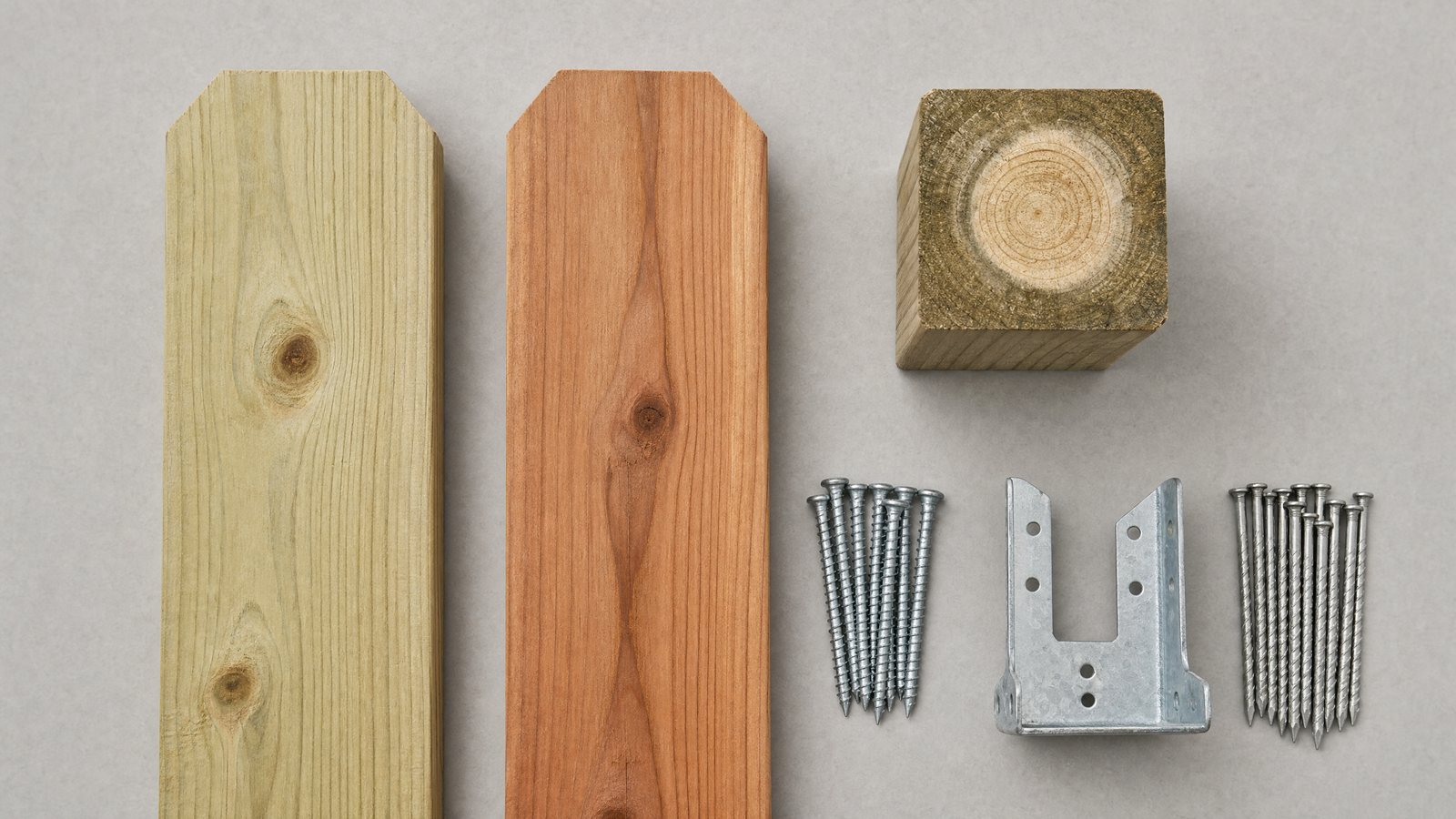
Carolina Fencing Solutions installs wood fences in western red cedar and pressure-treated pine for homes in Huntersville, Cornelius, Davidson and Mooresville. A wood fence installation is really two jobs that share a fence line. The posts sit in wet ground and need lumber rated for ground contact, which the USDA Forest Products Laboratory lists as use category UC4A. The pickets and rails live above ground, where the handbook rates cedar heartwood suitable untreated. Charlotte gets 43.60 inches of rain a year, and ground contact is what the handbook calls the high-hazard zone.
This article walks through that split: which wood goes where, what the post needs, which style suits which yard, and when to stain. It carries no prices; a written quote for your own yard is the only number worth comparing.
Key takeaways
- Humid air alone does not rot a fence. The USDA Wood Handbook puts serious decay above about 30% moisture content, which wood reaches from rain, condensation or wet ground.
- The handbook's use-category table puts fence posts in UC4A (ground contact) and fence pickets and rails in UC3B (above ground). Buy the post to the harder category.
- Western red cedar heartwood is rated resistant, which the handbook says serves well above ground. Ground contact is where it points to pressure-treated wood instead.
- Charlotte Douglas Airport averages 72.8 days a year with at least 0.10 inch of rain (NOAA 1991–2020 normals), so the ground line around a post is wet on a regular schedule.
- Semitransparent stain on saw-textured wood lasts 4 to 8 years in the handbook's finish table; one coat on new smooth wood, 2 to 4 years.
Pine or cedar: humidity is not what rots a fence
Ask around Lake Norman and you will hear that the humidity eats wood fences. The USDA says otherwise. Chapter 14 of the Wood Handbook (FPL-GTR-282, 2021) states that serious decay occurs only when wood is above the fiber saturation point, about 30% moisture content, and that "by itself, the water vapor in humid air will not wet wood sufficiently to support significant decay." Fully air-dried wood sits at or below about 20%. Muggy August afternoons grow mildew on a fence board. They do not rot it.
What does get wood past 30% is liquid water: rain landing on a flat surface, a board end that wicks, and the soil around a post. So the species question splits in two, and the handbook's own ratings tell you where each wood belongs.
Its Table 14–1 groups heartwood by decay resistance. Western red cedar is in the resistant group. Young-growth southern pine, the fence lumber sold today, falls under "pines (other than those listed)" in the slightly or nonresistant group, which is why pine fence lumber comes pressure treated. The same page draws the line that matters for a fence: heartwood in the resistant category "generally gives satisfactory service for wood used aboveground," while ground contact calls for the very resistant group, and where decay conditions are severe, pressure-treated wood "rather than resistant heartwood, is generally recommended."
Untreated sapwood of essentially all species has low resistance to decay and usually has a short service life under conditions favoring decay.USDA Forest Products Laboratory, Wood Handbook FPL-GTR-282, Chapter 14
That sentence is the reason to look at cedar boards before they go up. Cedar's protection lives in the heartwood, the red-brown wood. The cream-colored streak you sometimes see along the edge of a cedar picket is sapwood, and the handbook rates it no better than any other untreated sapwood. A picket with a wide sapwood band is cedar-priced wood that the handbook rates no better than untreated pine.
Our wood fence page describes the two options plainly: "Western Red Cedar for premium projects, treated pine for value." In the handbook's terms, that is a choice about the boards you see. It is not a choice about the posts.
| Fence part | Exposure | AWPA use category (FPL Table 15–6) | What the handbook points to |
|---|---|---|---|
| Posts | In soil and concrete, wet after rain | UC4A, general ground contact (lists "fence and deck posts") | Pressure-treated wood rated for ground contact |
| Rails | Above ground, fully exposed | UC3B, general above ground (lists "fence pickets and rails") | Treated pine, or cedar heartwood (rated resistant) |
| Pickets / boards | Above ground, fully exposed | UC3B | Treated pine, or cedar heartwood; sapwood rated low |
| Anything touching soil or mulch | Ground contact, whatever the part is called | UC4A | A UC3B board buried at the bottom is out of its rating |
Posts: the one part that lives in ground contact
The Wood Handbook's chapter on preservatives summarizes the American Wood Protection Association's use category system in Table 15–6. UC3B, general above-ground use fully exposed to weather, lists "fence pickets and rails." UC4A, general ground contact, lists "fence and deck posts." Same fence, two categories, and the post is the harder one. The chapter adds that each piece of treated wood should carry a brand, stamp or end tag showing the preservative, the retention and the intended use category. Before a post goes in the hole, that tag is worth reading.
Here is the detail that only shows up once you cut one. Pressure treatment drives preservative into the outer shell of a post; the cover illustration shows the darker treated band and the paler heart of a cut 4x4. A post trimmed to height on site exposes that heart. The handbook's answer is a thorough application of copper naphthenate (1% to 2% copper) to any cut surface, and it points to AWPA Standard M4 for the care of treated wood after treatment. Two practical consequences follow. Trim posts at the top, never the end going into the ground, and treat or cap the cut. Ask your installer what goes on a cut post end before the cap does.
For the concrete itself, our wood fence page states the standard in one line: "All posts set below frost line in 3,500 PSI concrete." What happens at the top of that concrete is the part to watch, which is the next section.
Post depth and concrete in Piedmont clay
You will also hear that red clay swells and pushes posts up. The USDA's official description of the Cecil series, a red clay soil it lists as large in extent across North Carolina and neighboring Piedmont states, does not support it: it rates Cecil "well drained," with moderately high saturated hydraulic conductivity and low shrink-swell potential. The clay is not heaving your fence.
The weather explains the wet zone better. NOAA's 1991–2020 annual normals for Charlotte Douglas Airport put annual rainfall at 43.60 inches, with 72.8 days a year of at least 0.10 inch, 30.0 days of at least 0.50 inch and 11.5 days of at least an inch. Each of those days soaks the few inches of soil and mulch right around a post, which is the ground-contact exposure UC4A exists for. The handbook adds that decay is relatively slow below about 50°F, so the warm, wet months are when the ground line works hardest.
The fix is geometric, and it is cheap. Concrete finished level with or below the surrounding grade collects water against the wood; concrete crowned above grade and sloped away sheds it. We walked through the soil layers an auger passes through, and why the collar shape matters, in our guide to fence installation in Huntersville. A yard that drains toward the fence line sends those rain days onto the posts, so grading is worth a look before layout.
If the planned line crosses a low spot where water still stands a day after a storm, it is worth sorting out the drainage first: regrading, a swale, buried downspout lines or a French drain, planned together so the water leaves the yard instead of moving to the next post. A drainage crew that walks the property in the rain can show you where the water is coming from before the first hole is dug.
On depth: we are not going to give you a single inch figure here, because the right depth moves with post height, gate loads and wind exposure. What we will say is that a quote should state the embedment depth and footing diameter in inches, separately for line posts and gate posts. A quote that says "set in concrete" and nothing else has not told you the thing that decides the fence.
Privacy, picket and shadowbox: which style for which yard
Our wood fence page describes each wood job as stick-built on site by our crews to fit the terrain, and lists privacy, shadowbox, picket, board-on-board and split-rail styles. They are not interchangeable, and the difference is mostly about wind and sightlines.
Board-on-board privacy. Overlapping vertical boards, so there is no gap to see through even after the boards shrink as they dry. That solid face is also a sail. A 6-foot wall of wood with nothing for wind to pass through puts its load straight into the posts, which is one more reason the post spec matters more on a privacy fence than on a picket fence. "Wood privacy fence" drew about 880 searches a month in North Carolina in Google Keyword Planner data we pulled in September 2026; our privacy fence page covers the wood, vinyl and composite versions side by side.
Shadowbox. Boards alternate on either side of the rail, so the fence looks finished from both yards and air moves through the offsets. It is the style to consider when a neighbor shares the line, or when an open lot on the lake side takes the wind.
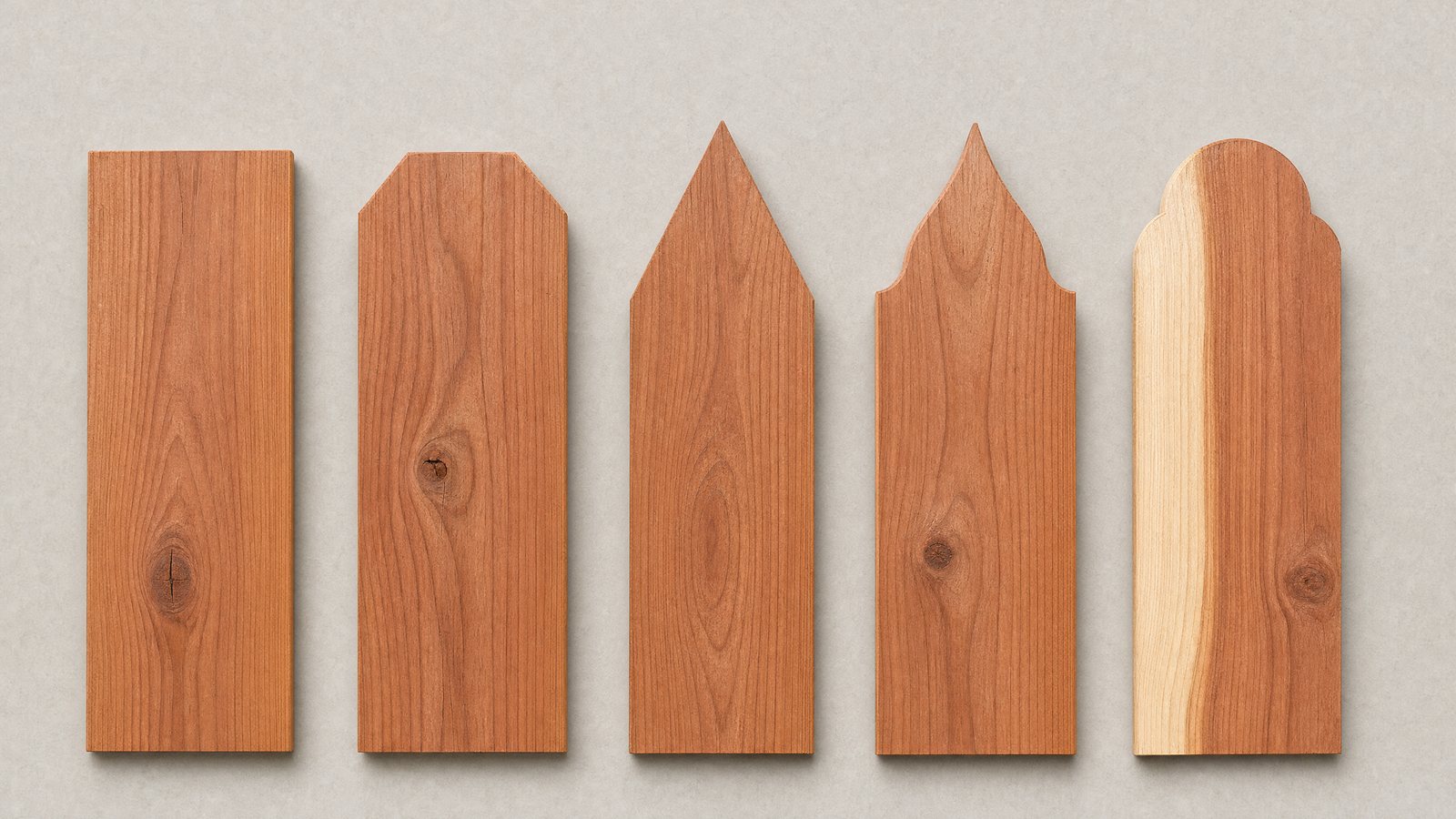
Picket. Spaced pickets at 3 to 4 feet, per our wood fence page, for front yards and gardens where the job is a boundary rather than a screen. The top profile is the design choice: flat, dog-ear, gothic, French gothic or scalloped.
Split-rail. Posts and horizontal rails only, for large lots where the goal is marking the line, not hiding the yard. It uses the least lumber above ground of these styles, and its posts still belong in UC4A.
Before the HOA and the town see it
If your neighborhood has an architectural review committee, a wood fence goes through it, and the questions tend to be concrete: height, color, which side faces out, and where the line sits against the lot boundary. We collected what these committees ask for, and how to put a complete packet together, in our guide to HOA fence rules around Lake Norman. Get the approval before the lumber is ordered, because a species or style change after approval can mean a second submission.
Separately from the HOA, our wood fence page says we pull required permits, schedule 811 utility locates, and coordinate with your HOA. Private lines between the meter and the house are not marked by 811; the Huntersville guide linked above explains that gap.
When to stain or seal, and how often
Two waits apply to a new fence. The same Wood Handbook, in its chapter 16 on finishing, says one week should be enough for the surface of waterborne-treated wood to dry before finishing, the point being to avoid preservative bleeding through paint or solid stain. Our wood fence page recommends a longer, more conservative wait of 30 to 60 days for the wood to dry, then a UV-protective semi-transparent stain. The handbook's week is a minimum for the surface; ours is about letting the whole board settle.
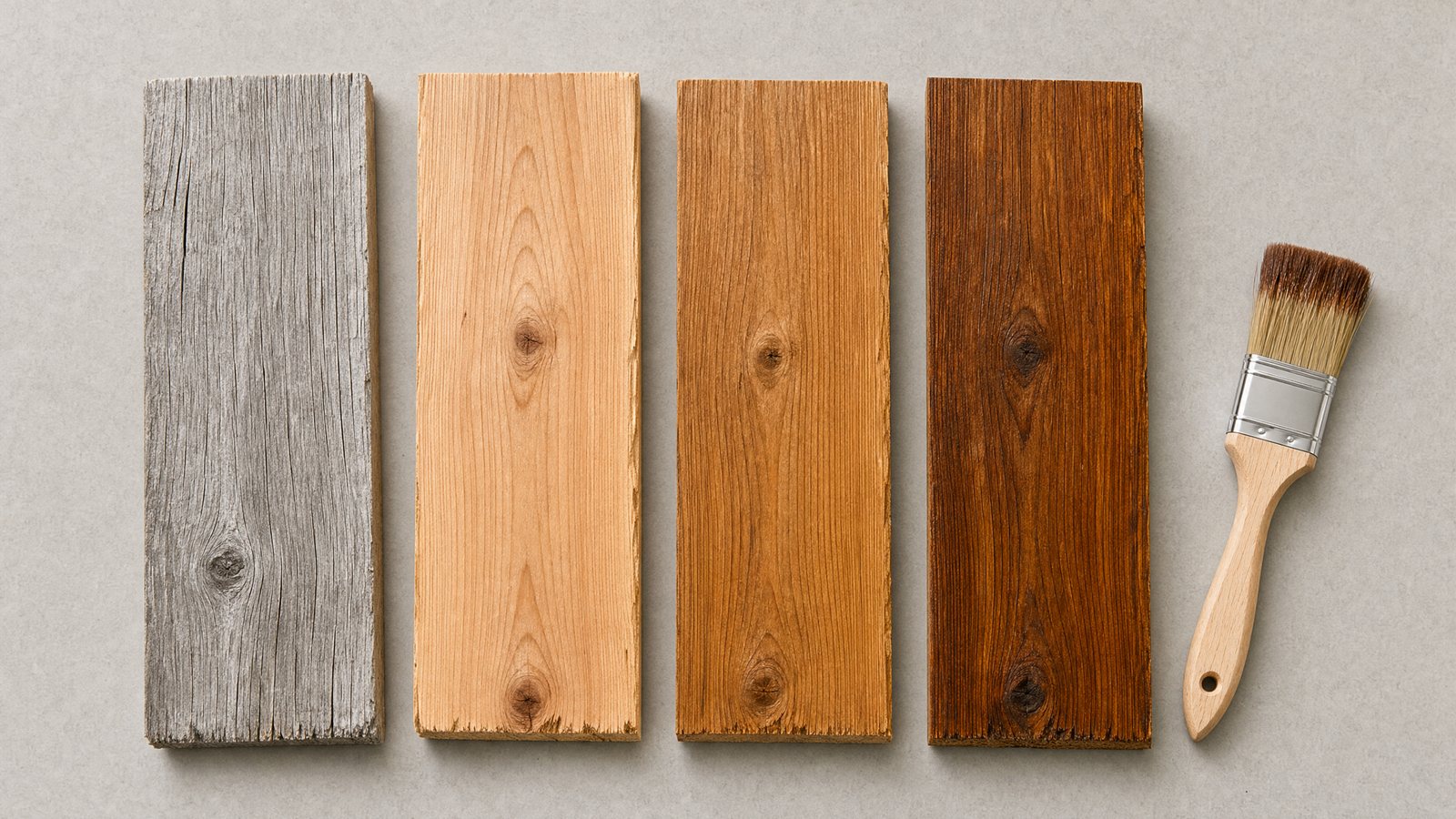
How often after that depends on the surface more than the calendar. Chapter 16's finish table gives semitransparent stain a service life of 4 to 8 years on saw-textured or weathered wood. On smooth wood it expects about half that, because less finish soaks in, and it puts one coat on new smooth wood at only 2 to 4 years. Two coats on rough or saw-textured wood may last 10 years. The handbook also says to brush oil-based semitransparent stains rather than roll or spray them. So the rough face of a cedar board, turned out, holds stain longer than the planed face.
| Measure | Figure | Source |
|---|---|---|
| Annual rainfall, Charlotte Douglas Airport | 43.60 in | NOAA 1991–2020 normals |
| Days with at least 0.10 in of rain | 72.8 days/yr | NOAA 1991–2020 normals |
| Days with at least 1.00 in of rain | 11.5 days/yr | NOAA 1991–2020 normals |
| Moisture content for serious decay | above about 30% | FPL Wood Handbook ch. 14 |
| Fully air-dried wood | 20% or less | FPL Wood Handbook ch. 14 |
| Dry time before finishing treated wood | 1 week (surface) | FPL Wood Handbook ch. 16 |
| Semitransparent stain, saw-textured wood | 4 to 8 years | FPL Wood Handbook ch. 16 |
| One coat of stain, new smooth wood | 2 to 4 years | FPL Wood Handbook ch. 16 |
What to get in writing before the first post goes in
Wood is the fence material where two quotes with the same footage can describe very different fences. Ask each installer to put these in writing:
- The species for posts, rails and boards separately, and for cedar, whether the boards are heartwood.
- The use category on the post tags: UC4A or higher for anything in the ground.
- Post embedment depth and footing diameter in inches, for line posts and gate posts, and how the concrete collar is finished.
- What gets brushed on cut post ends, and whether posts are trimmed at the top.
- Whether staining is included, and how long they wait before applying it.
- Both warranties: the material warranty and the workmanship warranty. Our wood fence page lists a 10-year work warranty alongside the manufacturer's.
If you are weighing the budget, our North Carolina fence cost guide covers what moves the number on a local job: clay, slope, tear-out and gates. For your own yard, request a free on-site estimate or call (704) 778-4122.
Questions about wood fence installation
Is cedar or pressure-treated pine better for a wood fence near Lake Norman?
For boards and rails above ground, either works: the USDA rates western red cedar heartwood as resistant to decay, and pine is pressure treated because its heartwood is rated slightly or nonresistant. For posts in the ground, the handbook points to pressure-treated wood rated for ground contact, not untreated cedar.
Does humidity rot a wood fence?
Not by itself. The USDA Wood Handbook says water vapor in humid air will not wet wood enough for significant decay; decay needs moisture content above about 30%, which comes from rain, condensation or wet soil. Humidity grows mildew on a fence. Ground contact is the high-hazard zone for rot.
What treatment rating should wood fence posts have?
Ground contact. The AWPA use category system, as summarized in the USDA Wood Handbook, lists fence posts under UC4A and fence pickets and rails under UC3B. Check the end tag on each post before it goes in the ground.
Does Carolina red clay push fence posts out of the ground?
The USDA's official description of the Cecil series, a red clay soil of large extent in North Carolina, rates its shrink-swell potential as low and its drainage as well drained. If a post leans or rots, look at the footing and surface water before blaming swelling clay.
How long should I wait to stain a new wood fence?
The USDA Wood Handbook says one week is enough for the surface of waterborne-treated wood to dry before finishing. Our wood fence page recommends a longer wait of 30 to 60 days, then a UV-protective semi-transparent stain.
How often does a wood fence need restaining?
The USDA Wood Handbook gives semitransparent stain a service life of 4 to 8 years on saw-textured or weathered wood, and 2 to 4 years for one coat on new smooth wood. Two coats on rough-sawn wood may last 10 years. Rough faces hold stain longer than planed ones.
What should happen when a treated fence post is cut on site?
Cutting exposes the untreated core of the post. The USDA Wood Handbook recommends a thorough application of copper naphthenate (1% to 2% copper) to the cut surface, and AWPA Standard M4 covers care of treated wood after treatment. Trim at the top, not the buried end.
Planning a fence in the Lake Norman area?
Get a written, itemized quote — usually within 48 hours. We handle permits, HOA review, and shoreline approvals.
Get my free estimateMore local guides

Fence Installation in Lake Norman: A 2026 Local Homeowner's Guide
Permits, HOA rules, soil, and lakefront setbacks — everything Lake Norman homeowners should know before installing a fence in Mooresville, Cornelius, Huntersville, or Davidson.
How Much Does a Fence Cost in North Carolina? (2026 Pricing Guide)
Real installed price ranges per linear foot for wood, vinyl, aluminum, and chain link in the Charlotte / Lake Norman area — plus the local cost drivers that move the number.
Best Fence Types for Mooresville & Huntersville Homes
The fence styles that actually hold up to NC humidity, summer storms, and HOA design standards in Mooresville, Huntersville, and Cornelius — ranked by what we install most.